Finding the look
- Post
- #002
- Date
- 1 November 2026
- From
- Viljami
Before writing any game code I wanted to know how the room might look like.
So I made fake screenshots and picked between them, three at a time.
Round one had three directions: a pixel-art desk in the style of Papers Please, a pre-rendered room in the style of Myst and a screen-first close-up of a glowing amber CRT.
The pre-rendered room won on the first look. It wasn't close.
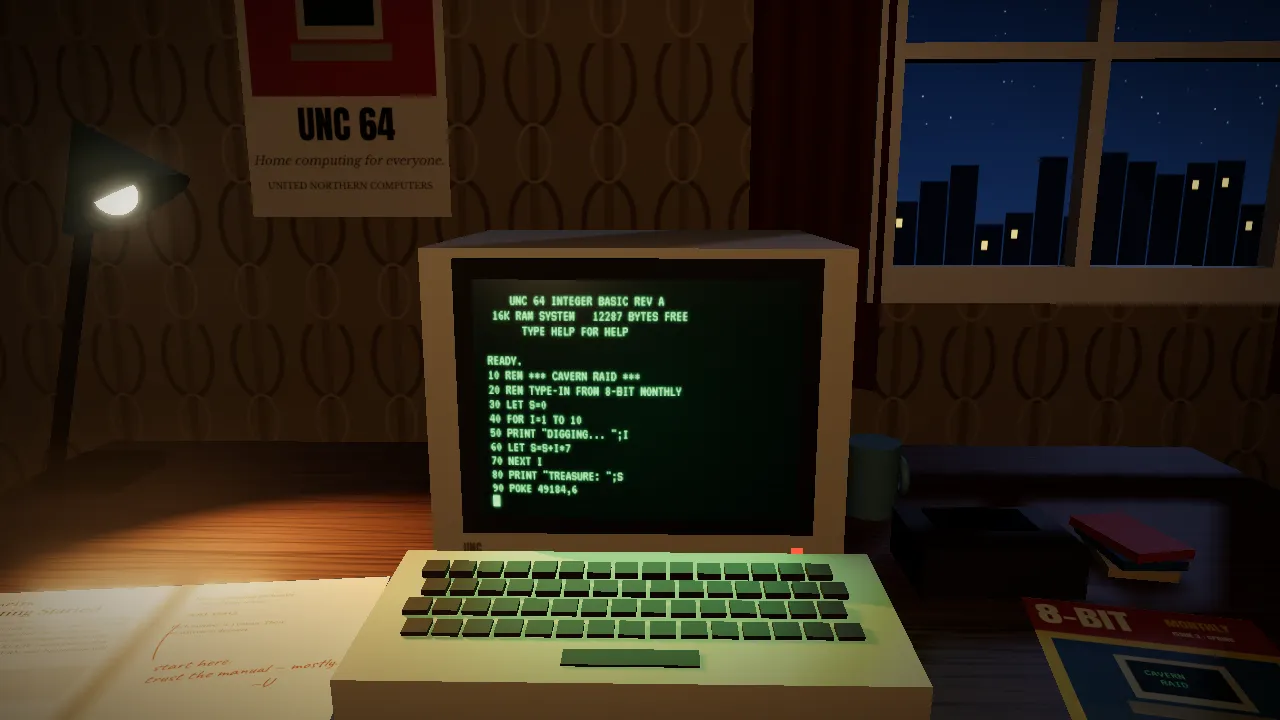
What did it become?
- Locked 3D, low-poly, flat-shaded. You never walk around the room. You look at things and the camera cuts.
- Woodgrain wherever it belongs. Desk, floor, shelves, the clock rim and a veneer strip on the computer itself. Every 80s machine that wanted to look expensive had one.
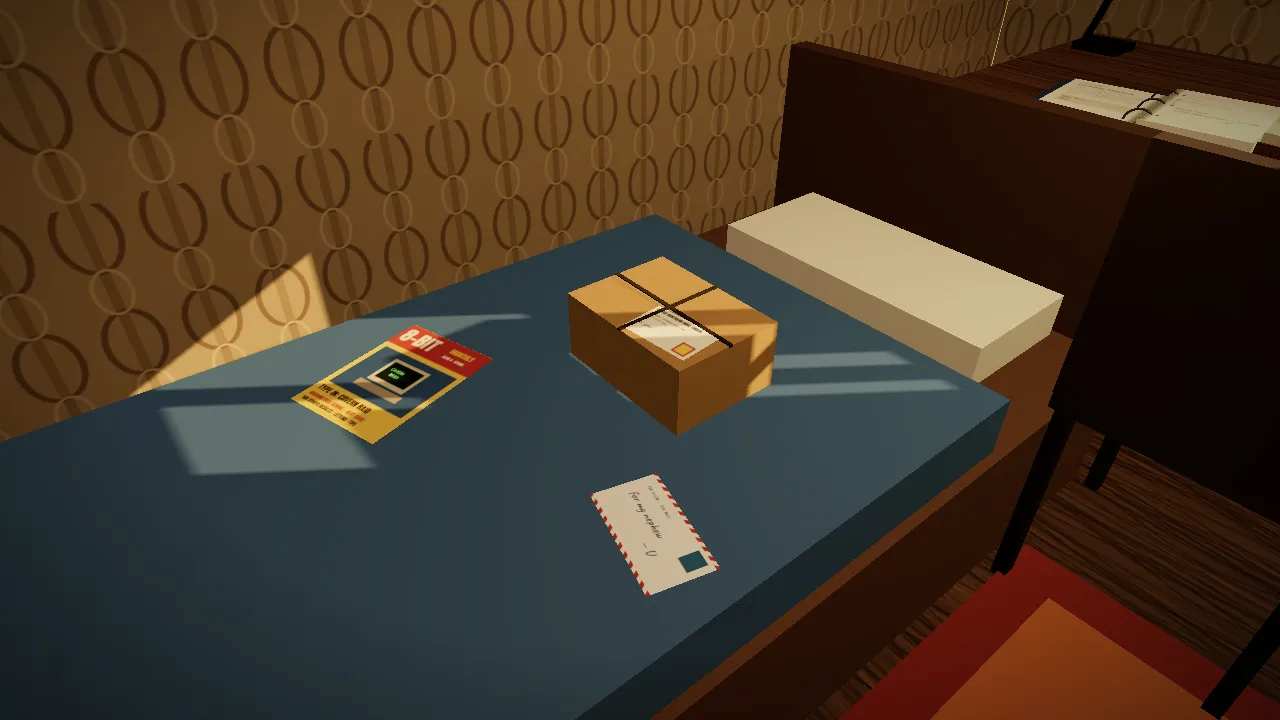
- The window is a real photograph. There's an actual opening in the wall and a 360° panorama behind it (CC0, from Poly Haven). Light from outside only gets in through the window, so the morning sun lands on the bed with the shadows of the window bars across it.
- Three times of day. Night, morning and day, with a quartz wall clock next to the calendar that always shows the time in the room.
- The manual is a thick ring binder. The uncle's notes are in red. Yours are in blue.
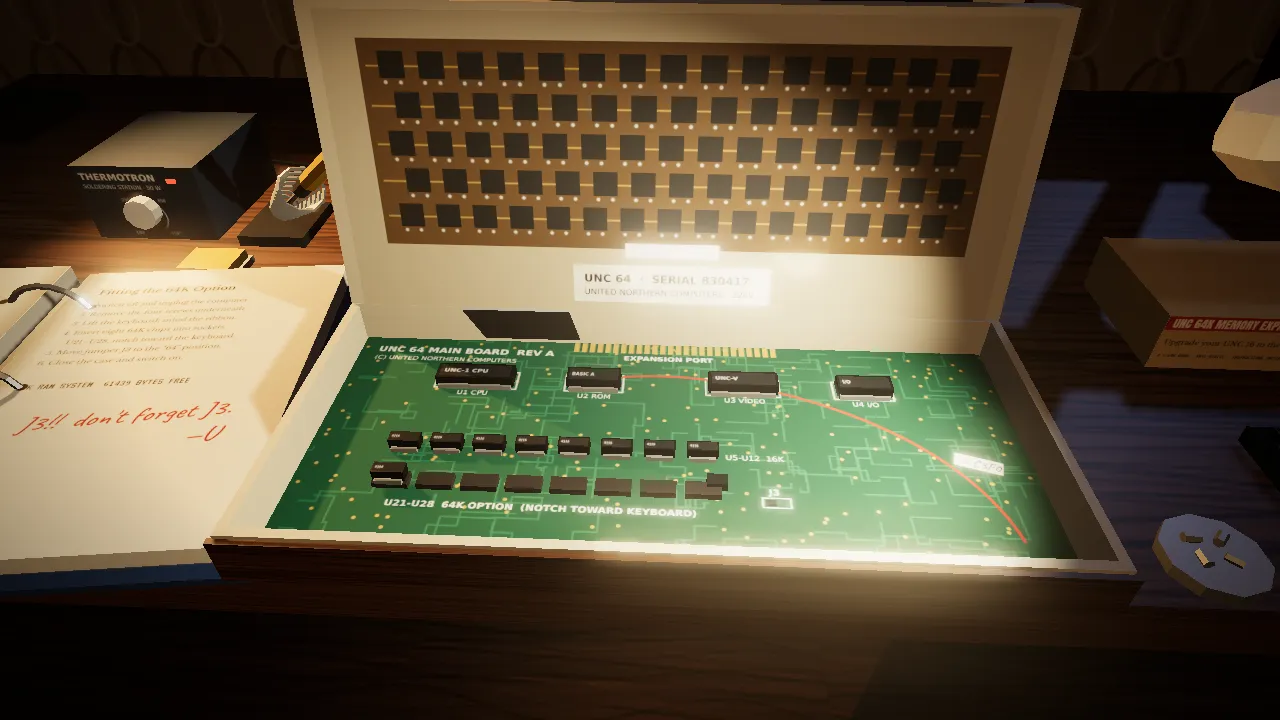
My favourite scene
The memory upgrade.
You open the case, find eight empty sockets marked 64K OPTION and start seating chips. The manual says to move jumper J3. The uncle's note in the margin says: don't forget J3.
Then you notice a red wire someone soldered onto the board by hand. It goes to an address range the manual calls reserved.
I'm not telling you where it leads. Yet.
How are these made?
Every frame here comes from a small three.js prototype: procedural textures, real lights, locked cameras.
The game itself is built in Godot, and these renders are the reference it has to match.
Next up: the CPU.
Viljami